Wheel-thrown red stoneware | Carved and smooth finishes | Approximately 2.5–3" diameter × 3–3.25" tall | Each piece individually sized
Red clay, small scale, one stem at a time.
These bud vases were wheel-thrown in my Portland studio from a red clay that’s new to me, sourced from our neighbors in Washington. It fires to a warm, earthy rust, and I’ve let it show wherever I could: on raw shoulders, bare feet, and the edges of carved texture where the glaze pulls back and the clay underneath takes over.
Some are wrapped in rows of scallops that catch glaze like little pools. Some wear a band of color and leave the rest bare. One is cracked all over like dry riverbed. They share a shape, but each one tells its own story about what happens when glaze meets red clay in the kiln.
The name comes from the madrona, the Pacific Northwest tree whose bark peels back to reveal warm red wood underneath. That’s what these feel like to me: color on the surface, something warmer just below.
Sized for a single wildflower, a sprig from the garden, or nothing at all. Line them up on a windowsill and let them keep each other company.
Meet the originals, Still Life: same small scale, Oregon clay, different conversation.
Available individually. Each piece is one-of-a-kind.

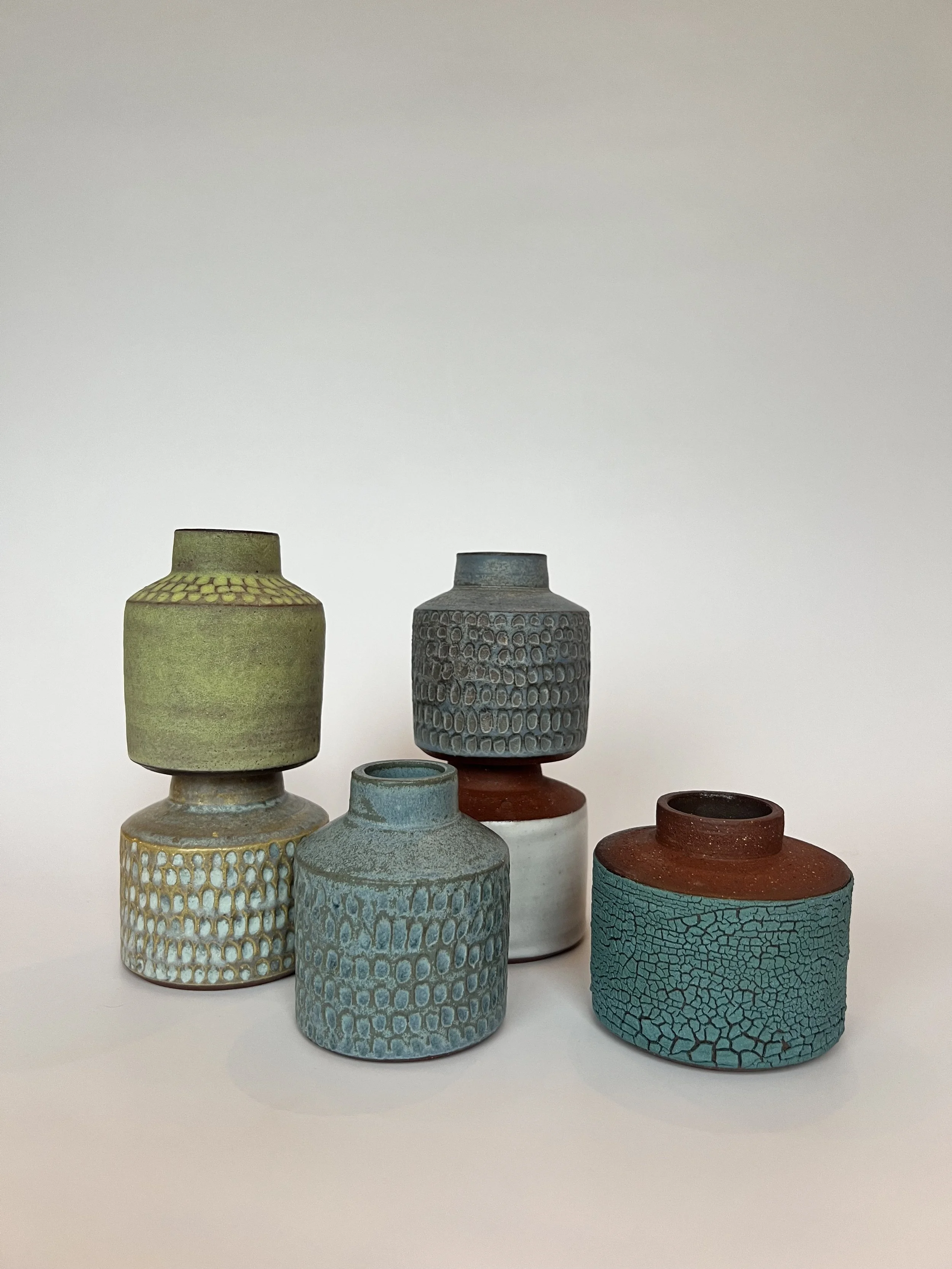 Image 1 of 8
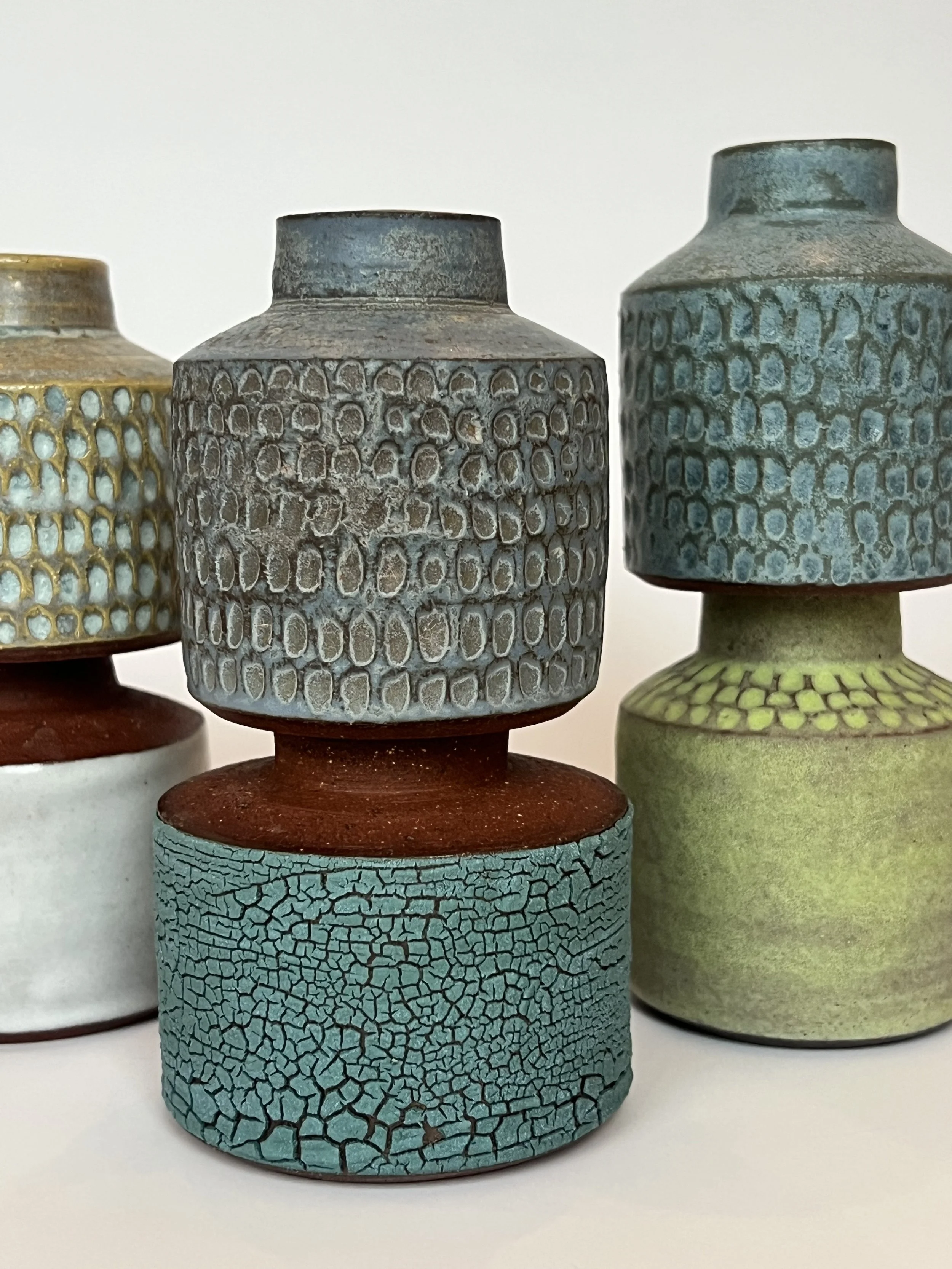 Image 2 of 8
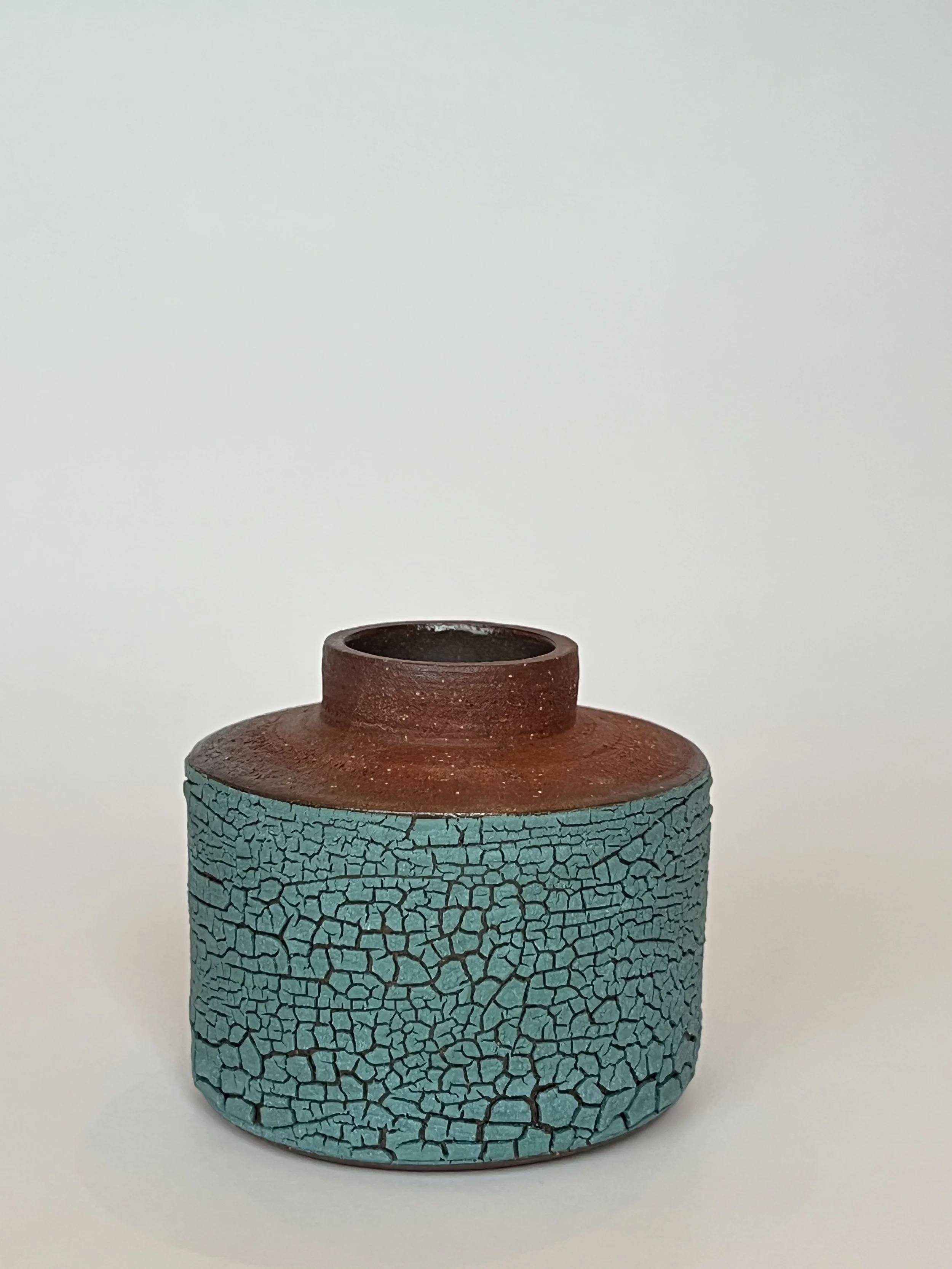 Image 3 of 8
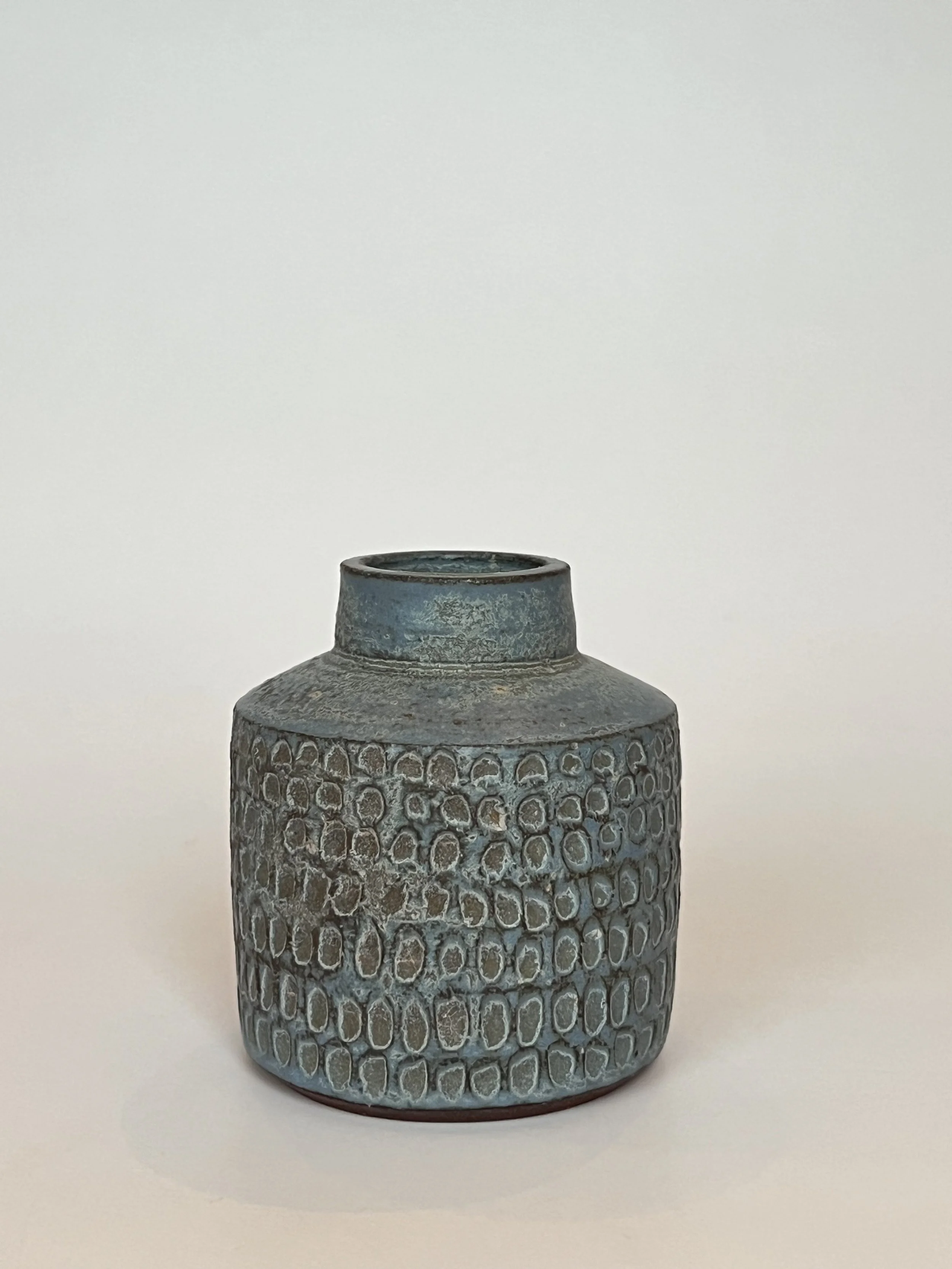 Image 4 of 8
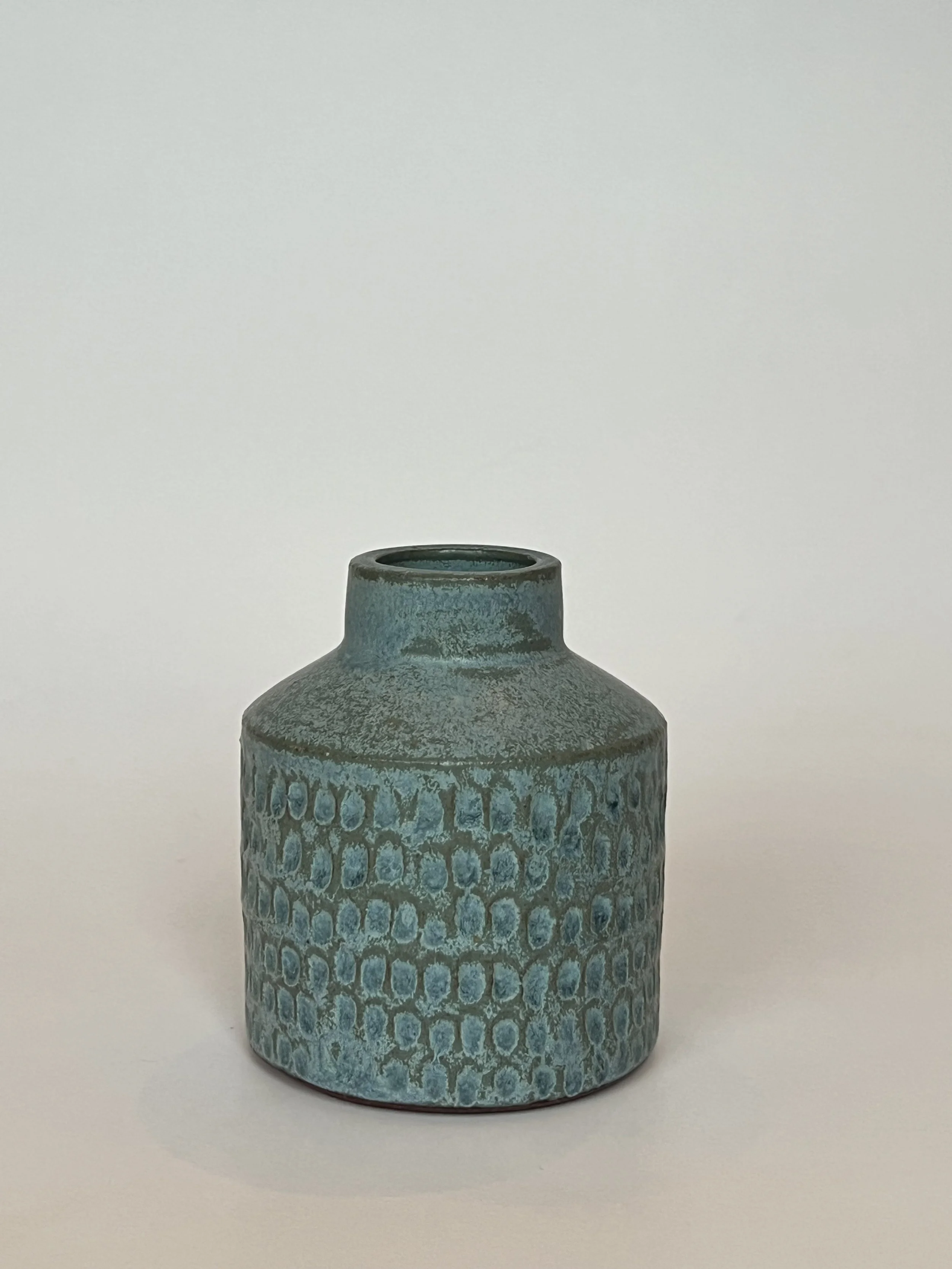 Image 5 of 8
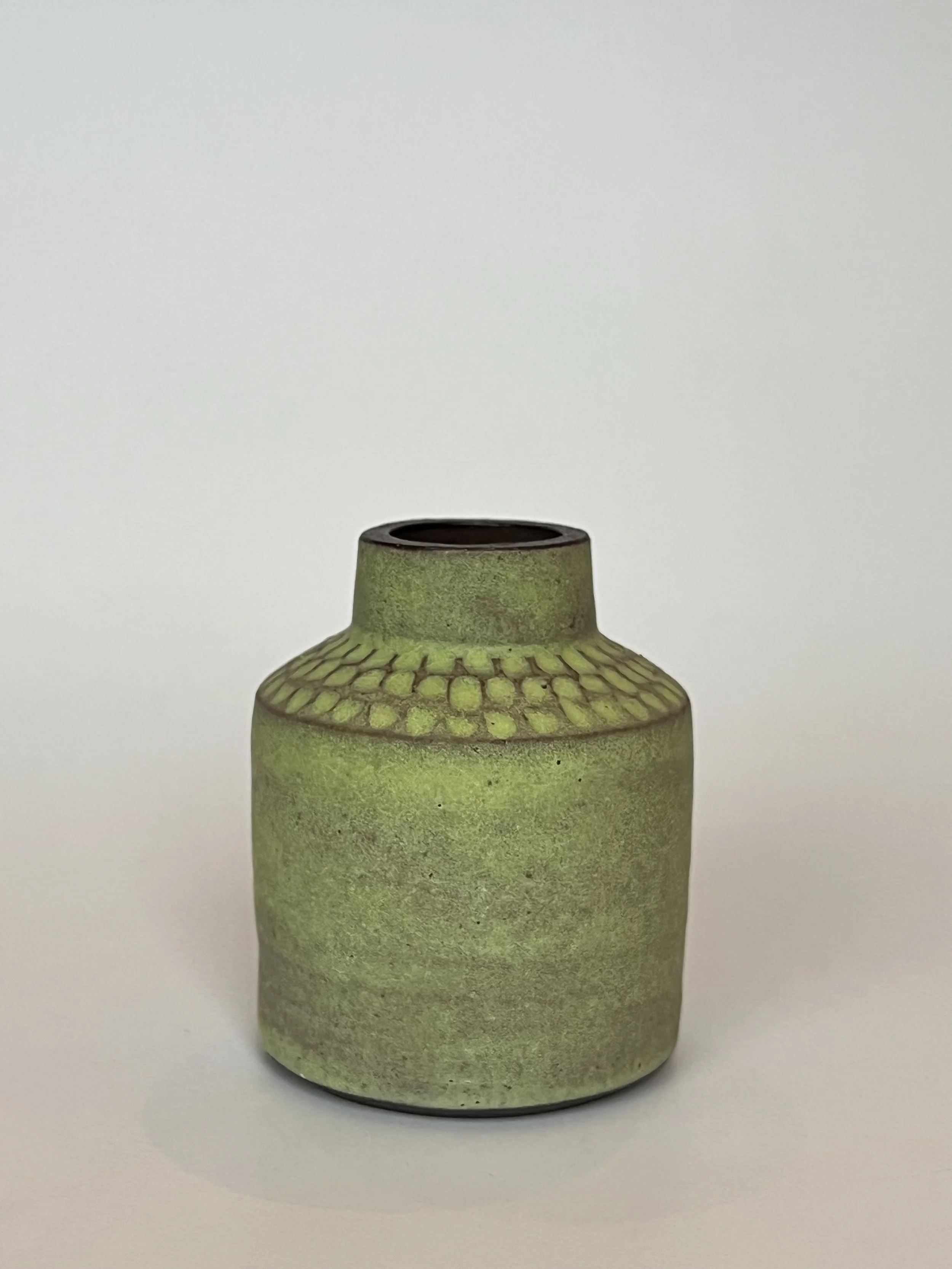 Image 6 of 8
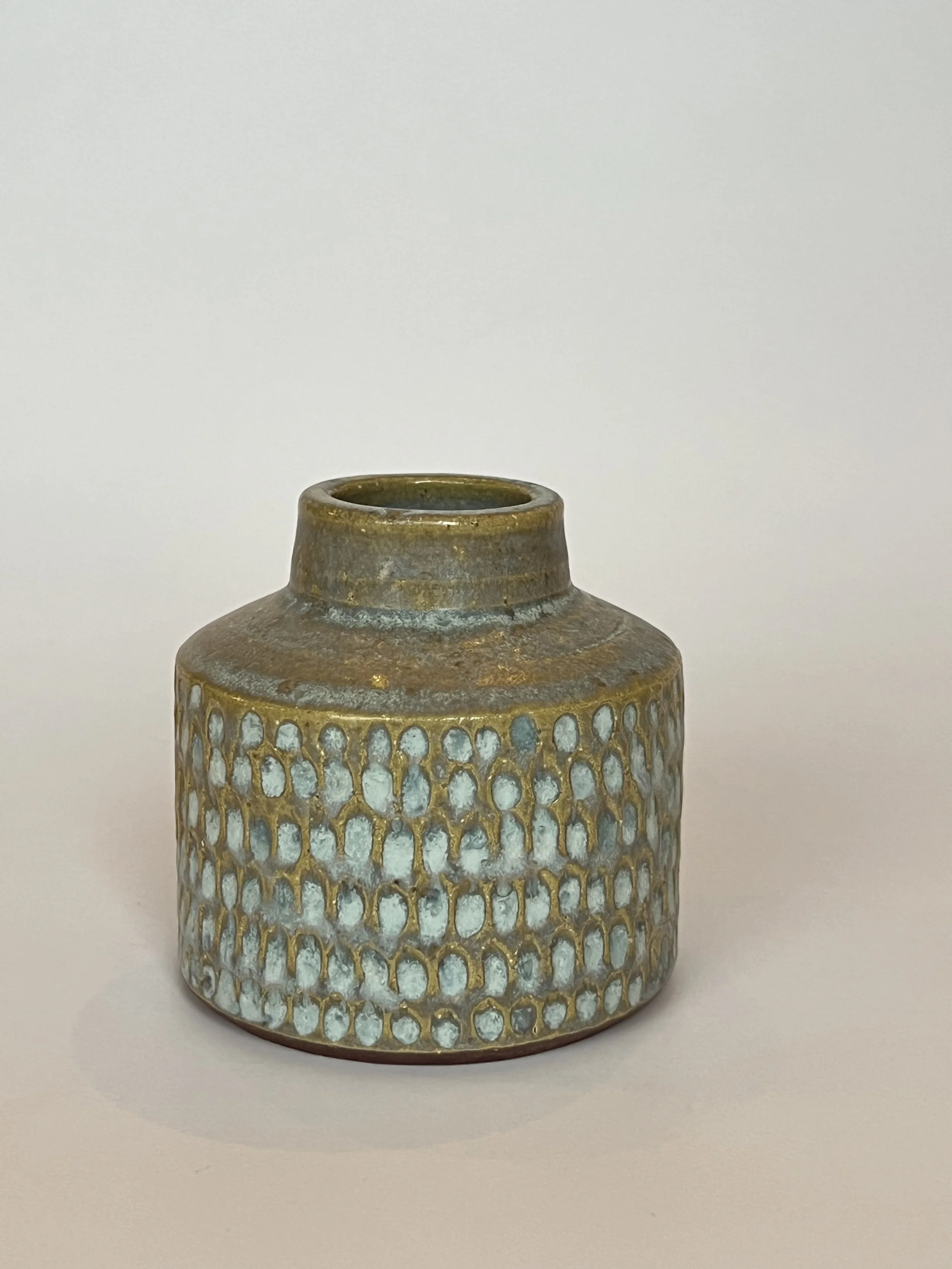 Image 7 of 8
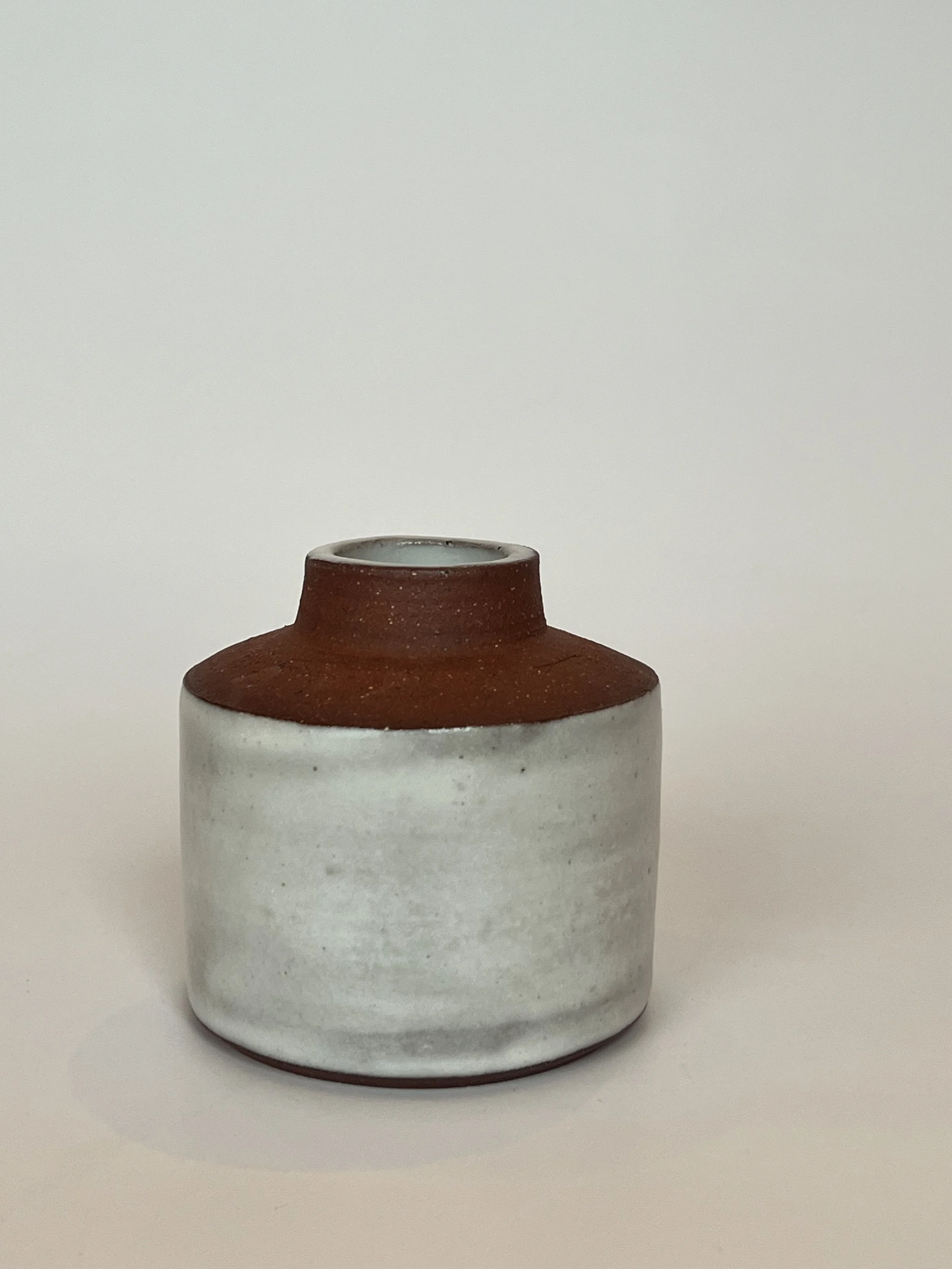 Image 8 of 8